
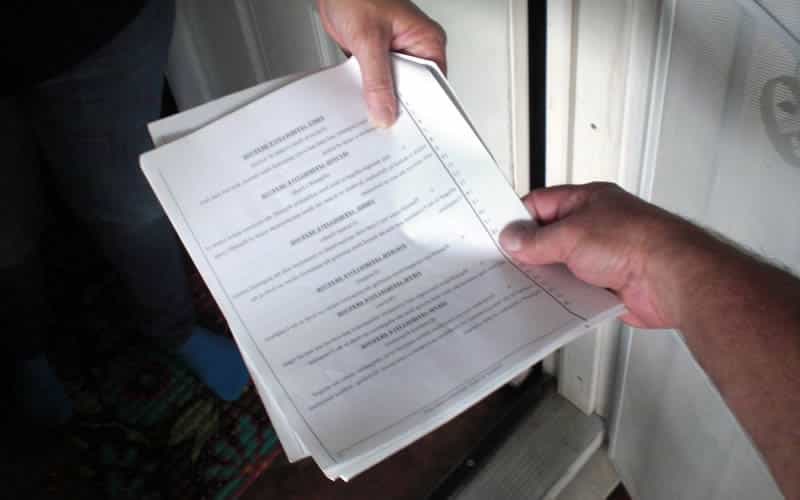


If you have commenced legal proceedings or are likely to do so soon, you will probably need to have the legal or court paperwork served on the other party.
Serving court papers can be relatively straight forward, but it can also pose several challenges. We hope offer some guidance about how to make the process smoother.
Civil Procedure Rules (CPR) and Family Procedure Rules (FPR) will govern how you are required to serve papers but deciding how to have the paperwork served is an important step. Just because you can serve your paperwork by first class post, does not necessarily mean first class post is the right option.
Let say you served the papers by first class post post, but what happens if the court advise you several weeks later, the paperwork has been returned by Royal Mail marked “gone away”. Are you still able to proceed or has this resulted in several weeks delay?
A Process Server could have potentially helped prevent this delay.
Be Organised
Most process server agencies will charge more if the service is urgent, for example same day or next day. And they will charge less if service isn’t rushed and can be dealt with in 2-3 days from instruction.
Have a conversation with an agency such as KittyHawk Investigations a week beforehand.
Leaving it last minute to instruct could result in process serving fees being more. The individual agent will have to take more time out of his or her day to serve your papers if your matter is last minute.
However, before even reaching out to a process server, do a little research on the person and address for service.
Ask yourself this question?
Are you certain the subject matter lives or is based at the address you know of ?
If not you may want the agency to carry out a desktop trace
Instruction
Instructing a Process Server, like KittyHawk Investigations is very straight forward.
You need to send the agency the court papers or legal documents you want serving.
You will need legal and lawful authority to instruct – the agency may carry out a KYC on instruction
You would normally instruct them via email and the process server will print the required copies to be served.
Or if preferred you could mail the papers for service, but this is a lot slower and could cost more.
Gather Information About Respondent
The more accurate information you supply, the easier and faster service will be.
Full name of person or company you need to serve.
Current address (work address if relevant)
Phone numbers or emails
Description or Photograph (helpful when multiple people reside at the address)
Any information about their day to day activities (can help with scheduling attempts)
You will already know the name of the person or company you need to serve.
You can check company details on companies house, including the registered office address and directors details. Bear in mind, directors often use the companies details as a correspondence address. It may not be their home address.
If a home address needs to be located, then a trace enquiry could help establish this for you.
Royal Mail can be used to check correct house names, numbers and postcodes. Simple typos can delay papers being served so check this out before instructing a Process Server.
Accurate phone numbers or emails can assist when your Process Server is struggling to meet anyone at the address.
Whilst we would not normally suggest contact is made immediately, as the element of surprise is lost, they can help bring the paperwork to the attention of the person we are serving.
A description or photograph of the person you are serving can be very helpful. There is nothing worse in our opinion when stood talking to someone on the doorstep and they’re denying there identity. A photograph can help overcome this obstacle.
Do Not Tip Off The Person Or Subject Matter You Are Serving
The element of surprise is one of the most important factors in our opinion.
We are able to confirm the identity of a person, before they realise why the process server is there and once I know we are speaking to the correct person on the doorstep, your papers are as good as served.