
Serving a divorce petition (now formally known as a divorce application under the no-fault divorce system) is an important legal step. If it isn’t done correctly, your divorce can be delayed, rejected, or even dismissed by the court.
This guide explains how a divorce petition is usually served in the UK, how the court handles service, how professional process servers can help, and the common mistakes you should avoid.
What Does “Serving a Divorce Petition” Mean
“Service” simply means delivering the divorce application to your spouse (the respondent) in a way that the court recognises as valid.
The court must be satisfied that your spouse has received the documents before the divorce can proceed. Without proper service, your case cannot move forward.
How the Court Normally Serves a Divorce Petition
In most cases, the court will handle service for you.
1. Service by Post
The court sends the divorce application to your spouse by post. This includes:
A copy of the application
An acknowledgement of service form
Your spouse is expected to complete and return the acknowledgement to confirm receipt.
2. Email Service (Where Applicable)
If email details are provided and accepted, the court may serve documents electronically.
3. What Happens Next
If your spouse cooperates and returns the acknowledgement, the process moves forward smoothly.

What If Your Spouse Doesn’t Respond
This is where problems often arise.
If your spouse:
- Ignores the documents
- Refuses to acknowledge service
- Has moved address
- Is deliberately avoiding contact
Then the court may require proof of service before allowing the divorce to continue.

How a Process Server Can Help
A professional process server is a independent third party. They must be over 18 years of age.
A Process Server is often the quickest and most reliable way to serve divorce papers when cooperation breaks down.
Personal Service
A process server will:
Attend your spouse’s address
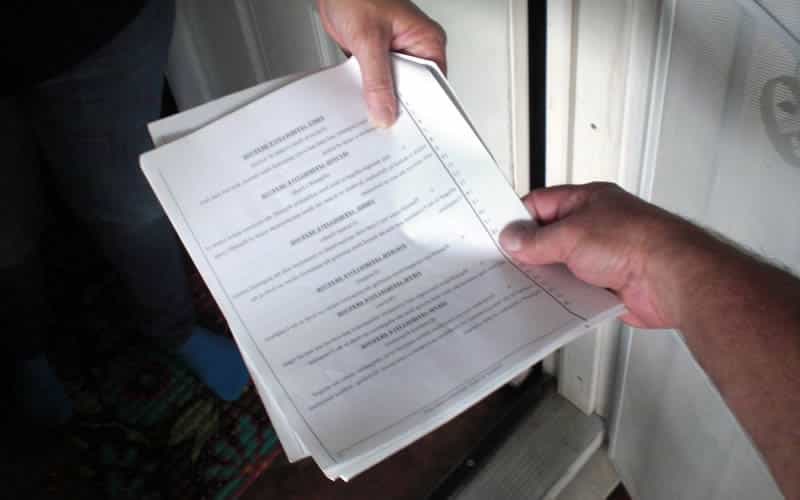
Hand the documents directly to them
Confirm their identity
This is known as personal service and is one of the strongest forms of legal service.
Statement of Service / Certificate
After serving the documents, the process server provides:
A statement or certificate of service
Details of when, where, and how service took place
This can be used as evidence in court.
Tracing and Enquiries
If your spouse’s whereabouts are unknown, many process servers can:
Make local enquiries
Attempt service at multiple addresses
Can I serve the divorce papers myself
No, you cannot serve the divorce papers yourself if you’re the one filing for divorce. The person who serves the papers must be an independent third party. This means you can’t serve them yourself, nor can a close family member do it. Many people hire a professional process server to ensure they serve the papers properly and meet legal requirements.